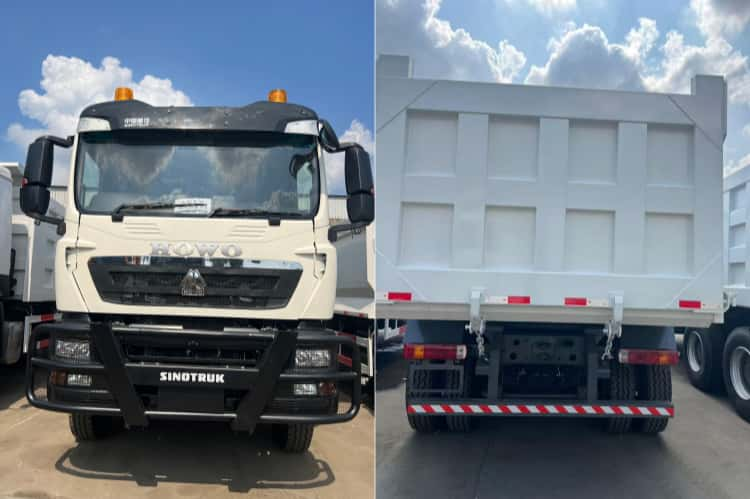
Warranty Traps: Risks Of Non-Standard Fake Reman Truck Deals
Introduction
Suppliers of non-standard, fake reman trucks often advertise attractive warranty coverage as a selling point. They use phrases such as “12-month reman warranty”, “engine covered” or “major component guarantee” to convince fleet procurement teams the asset is protected. In reality, these loosely drafted agreements are filled with exclusion clauses, ambiguous definitions and shifting responsibility rules. When a critical breakdown happens, buyers quickly discover the warranty is nearly unenforceable. Unlike certified reman warranty tied to fixed engineering benchmarks, these fake reman warranty traps transfer nearly all operational risk back to the fleet.
Vague definition of “covered components”
The first and most widespread trap lies in undefined coverage boundaries. The sales pitch may promise warranty on the engine, transmission or chassis, yet the contract buries narrow definitions. In many fake reman deals, “engine coverage” only applies to the bare block casting. All internal moving parts — crankshaft bearings, piston assemblies, injectors, turbochargers and valve trains — are classified as consumable or wearable items and excluded. Frame coverage may exclude weld zones, cross-members and high-stress transition points, exactly where fatigue cracks most often develop.
Without a component-level schedule aligned with reman inspection records, sellers can deny claims by arguing that the failed part was not included. REMAN ROAD reman warranty documents attach a clear bill of recovered and replaced parts linked to the VIN dossier, so there is no room for subjective interpretation.
Long lists of hidden exclusion triggers
Fake reman warranty include broad exclusion clauses that can invalidate coverage for almost any failure. Common triggers include:
- “Overload or harsh operating conditions” — a flexible clause that can be applied to nearly every heavy-duty hauling breakdown
- “Improper maintenance by buyer’s workshop” with no clear maintenance standard
- “Use of non-genuine lubricants or filters”
- “Modifications, accessory installation or ECU tuning”
- “Normal wear and tear”, even for failures caused by poor reman workmanship
The supplier does not need to prove negligence. They only need to claim one exclusion condition applies. Even defects originating from skipped NDT, out-of-tolerance machining or poor assembly can be dismissed under these clauses.
hort warranty windows paired with delayed latent failures
Fake reman truck workflows skip structural fatigue screening and bench calibration. Many defects do not surface during the first 30 to 90 days of light yard operation. Subsurface cracks, poorly calibrated fuel systems and marginal bearing clearances only fail after sustained heavy loading, high temperature cycles or cross-border long-haul work.
The advertised warranty period often expires right before these latent defects emerge. Once the window closes, the supplier disclaims all liability, even though the root cause existed before delivery. REMAN ROAD certified reman warranty is designed around the validated reman service cycle, matching the expected timeline of reset performance rather than an arbitrarily short promotional term.
Cascading damage exclusion: only the failed cheap part is covered
A typical warranty trap separates the root failure from secondary damage. If a low-grade reman bearing seizes and destroys a crankshaft, gear set or entire engine assembly, the supplier may only agree to replace the bearing. All collateral damage, downtime cost, recovery fee, cargo penalty and rental replacement expense are excluded.
For fleets, this is financially devastating. Heavy truck failures rarely stay isolated. One defective component can destroy multiple high-value assemblies. Standard REMAN ROAD reman warranty defines cascading damage scope clearly, tied to verified reman workmanship defects rather than limited part-only replacement.
Onerous claim procedures and evidence burdens
Many non-standard warranty agreements place the full investigative burden on the buyer. To file a claim, the fleet must provide independent metallurgical reports, load logs, lubricant analysis and maintenance records to prove the defect came from reman workmanship, not field operation.
Remote operators in Africa and Central Asia face practical barriers: limited local testing labs, high third-party inspection costs and slow report turnaround. Suppliers can stall, request repeated documentation, or simply delay responses until the fleet chooses to absorb the repair cost rather than pursue the claim. Genuine certified reman keeps all inspection and rework records in the VIN-linked digital dossier, so evidence of workmanship is already on file.
No traceable service network and unilateral repair control
Some fake reman truck sellers require all warranty repairs to be performed only at their own designated workshops. If the truck breaks down hundreds of kilometres away in a remote project zone, the fleet must pay expensive transport to move the vehicle, or forfeit the warranty.
Other suppliers offer no after-sales service network at all. Once the truck is shipped across borders, communication becomes inconsistent, spare parts availability is unreliable, and deposit-holding traders may disappear. Unlike REMAN ROAD’s coordinated regional service and audit trail model, these informal arrangements have no enforceable service commitments.
Verbal promises override written contract terms
Sales representatives often make broad verbal guarantees that contradict the fine print. Buyers may be told “the whole drivetrain is covered for one year”, while the signed document states “as-is with limited 30-day functional check”.
In cross-border trade, verbal commitments are extremely difficult to enforce. Disputes fall under unclear or distant legal jurisdictions. The written contract always controls, and buyers discover too late that the sales promise was never formalised. Certified reman warranty terms as a formal conformity statement attached to the digital asset record, aligned with the published reman benchmark.
Misclassification: warranty for “remanufactured” when the unit is merely refurbished
The core foundational trap is mislabeling. A supplier markets a cosmetic refurb truck as remanufactured and sells a “reman warranty”, but the vehicle never went through full disassembly, NDT screening or bench validation.
The warranty is built on a false premise. It cannot cover structural fatigue or hidden material defects because those risks were never assessed. This counts as greenwashing and misrepresentation. REMAN ROAD certification and its associated warranty are only issued once the unit passes all benchmark gates; refurbishment or partial overhaul units cannot receive reman warranty status.
No residual liability or escalation framework
Standard industrial reman warranty includes escalation paths, independent third-party dispute arbitration and defined liability caps. Fake reman warranty documents often contain no escalation process. If the supplier rejects a claim, there is no agreed independent auditor, no appeal mechanism and no transparent quality review process.
Fleets have little recourse except to stop future purchases, after absorbing the financial loss. This lack of neutral audit access is a major difference from the REMAN ROAD system, where third-party audit rights are written into the warranty framework.
Closing
Warranty traps in fake reman deals work on a simple principle: attractive headline coverage hides narrowly limited, easily voided obligations. The warranty creates an illusion of protection while the underlying shortcuts — skipped inspection, untested subsystems, counterfeit replacement parts and unassessed structural fatigue — remain unaddressed.
For fleet buyers, a trustworthy reman warranty is not a marketing add-on. It must be anchored to a documented engineering reset, component traceability, clear coverage scope and enforceable dispute terms under a recognised benchmark. REMAN ROAD’s certified reman warranty removes these traps by tying every coverage commitment to the auditable inspection, test and rework history of the individual vehicle.