
Standardized Tipper Truck Remanufacturing
Discover the full standardized industrial truck remanufacturing process of REMAN ROAD reman tipper trucks, including base unit screening, full disassembly, deep cleaning, NDT inspection, component renewal, precision reassembly, multi-stage testing and traceability filing. Learn how professional reman differs from simple cosmetic refurbishment.
Overview
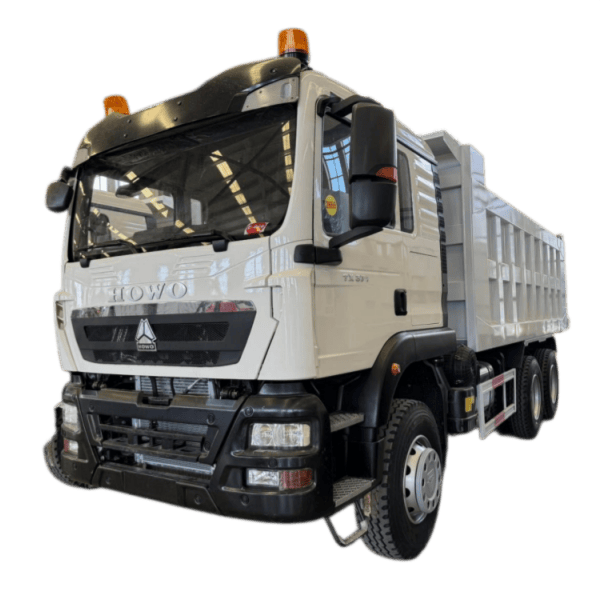
Industrial tipper truck remanufacturing is a rigorous, standardized and fully traceable industrial asset regeneration system, rather than simple vehicle repair, partial renovation or cosmetic repainting. Every reman tipper truck from REMAN ROAD undergoes a complete closed-loop industrial process. Each production link follows unified OEM-referenced technical standards, covering asset screening, structural detection, component restoration, precision assembly and systematic performance verification. The whole process completely eliminates hidden structural risks caused by long-term heavy-load operation, restores the vehicle’s overall performance to near-factory level, and creates safe.
Table of Contents
- Step 1: Base Unit Screening & Feasibility Evaluation
- Step 2: Full-Vehicle Complete Disassembly & Classification Sorting
- Step 3. Industrial Deep Cleaning & Surface Purification
- Step 4: Non-Destructive Testing & Precise Defect Grading
- Step 5: Precision Component Repair & Standardized Renewal
- Step 6: Standardized Assembly & Torque Precision Calibration
- Step 7: Multi-Stage Whole-Vehicle Performance Testing
- Step 8: Finishing, Filing & Standard Delivery
- Core Difference: Standard Remanufacturing VS Simple Refurbishment
- REMAN ROAD: Brand Positioning, Core Standards & Development Vision
Step 1: Base Unit Screening & Feasibility Evaluationsibility Evaluation
The quality of the base unit determines the upper limit of reman tipper truck quality. This stage is the primary barrier of the entire reman workflow, used to eliminate unqualified waste vehicles and reserve qualified regenerable base assets.
Whole-Vehicle Basic Condition Investigation
- Professional engineers conduct a full inspection of the overall vehicle condition, including vehicle service life, historical working scenarios, long-term load intensity, and overall wear degree.
- We record original vehicle configuration, assembly matching status and basic operating data to judge the initial regeneration value of the equipment.
- Vehicles with chaotic assembly modification and long-term overload abusive operation will be marked with risk warnings.
Frame & Load-Bearing Structure Detection
- As the core bearing foundation of the tipper truck, the frame is inspected in all directions.
- We focus on checking overall frame deformation, longitudinal and transverse beam damage, welding crack risks and corrosion degree.
- Base units with permanent frame distortion, penetrating cracks, severe collision damage or large-area metal corrosion are directly eliminated and prohibited from entering the remanufacturing process.
Core Assembly Residual Life Assessment
- We conduct professional residual life detection for key assemblies such as engine, gearbox, drive axle and hydraulic tipping system.
- By detecting internal wear, operating efficiency and sealing performance of core parts, we accurately judge whether the assembly has regeneration value.
- Assemblies with burnt loss, serious mechanical failure and irreparable aging damage will be completely scrapped and replaced in subsequent processes.
Remanufacturing Qualification Confirmation & Filing
- After comprehensive evaluation, all qualified base units will form an independent assessment report, recording all detection data and evaluation results.
- Only vehicles that fully meet REMAN ROAD industrial truck reman standards can be included in the formal reman production plan, forming the first traceable record of the whole vehicle regeneration cycle.
Step 2: Full-Vehicle Complete Disassembly & Classification Sorting
Different from partial disassembly of simple refurbishment, standard industrial remanufacturing requires complete teardown of the whole vehicle to the smallest independent component unit.
Sequential Layer-by-Layer Dismantling
- Technicians follow unified standard disassembly sequences, starting from exterior accessories, cab and cargo box, then disassembling chassis systems, powertrain assemblies and hydraulic systems step by step.
- All dismantling operations comply with industrial specifications, avoiding secondary damage to parts caused by violent disassembly, and protecting the integrity of reusable components.
Independent Component Separation & Marking
- All disassembled parts are completely separated, including fasteners, sealing parts, pipeline components, electrical accessories and mechanical assemblies.
- Each batch of parts is pasted with independent identification labels, corresponding to the vehicle’s unique code one by one, to avoid part mixing and ensure accurate traceability of subsequent matching and assembly.
Initial Classification & Sorting of Parts
- After disassembly, parts are initially divided into three categories: reusable parts, repairable parts and scrapped parts.
- Seriously damaged and aging parts are directly classified as scrap; intact parts are reserved for deep cleaning and re-inspection; partially worn parts are marked for subsequent professional repair and precision restoration.
Step 3: Industrial Deep Cleaning & Surface Purification
Professional industrial deep cleaning is adopted to completely purify all components, ensuring no dead-angle dirt remains, so as to provide accurate detection conditions for defect inspection.
High-Pressure Overall Dust & Sediment Removal
- All disassembled parts are cleaned by industrial high-pressure water guns and air pressure equipment to remove surface floating dust, stone residues, soil and bulk attachments.
- This step removes most surface dirt and avoids hard residue affecting subsequent fine cleaning and detection work.
Professional Oil Sludge & Carbon Deposit Cleaning
- For engine internal parts, gearbox components, hydraulic pipelines and mechanical friction parts with serious oil sludge and carbon deposits, we use special industrial cleaning agents and ultrasonic cleaning equipment for deep purification.
- Thoroughly remove aged oil dirt, condensed carbon deposits and lubricant deterioration residues to restore the original metal state of parts.
Rust Removal & Surface Oxidation Treatment
- For metal parts with surface oxidation and slight rust, we adopt physical polishing and chemical rust removal processes to completely eliminate rust layers and oxide layers.
- After treatment, the metal surface is smooth and flat, which is convenient for subsequent non-destructive testing to accurately identify tiny cracks and fatigue defects.
Post-Cleaning Drying & Secondary Sorting
- All cleaned parts are fully dried in a constant-temperature dust-free workshop to prevent secondary oxidation and moisture corrosion.
- After drying, technicians conduct secondary manual sorting to reconfirm the part status, eliminate parts with hidden damage exposed after cleaning, and further optimize the part matching system.
Step 4: Non-Destructive Testing & Precise Defect Grading
Simple renovation only observes surface defects, while industrial remanufacturing uses professional non-destructive testing technology to penetrate and detect internal metal fatigue, microcracks and hidden structural damage, realizing zero omission of vehicle risks.
Frame & Key Load-Bearing NDT Detection
- We use ultrasonic testing and magnetic particle testing equipment to conduct full coverage detection on vehicle frame, longitudinal beams, suspension brackets, tipping base and other key load-bearing structures.
- Accurately detect invisible microcracks, internal metal fatigue and structural stress concentration problems that cannot be distinguished by naked eyes.
Assembly Internal Wear & Tolerance Detection
- For engine cylinder bodies, crankshafts, gearbox gears, axle housings and other precision assemblies, we use professional measuring instruments to detect fit tolerance, wear clearance and deformation degree.
- All detection data is compared with OEM original factory standard values to judge whether the parts meet reuse standards.
Hydraulic & Sealing System Inspection
- Professional pressure testing and sealing detection are carried out on hydraulic tipping cylinders, oil pipes, valve groups and all sealing components.
- Check for internal pipeline aging, pressure loss, sealing failure and latent leakage risks to ensure the stability of the core tipping function of the tipper truck.
Quantitative Defect Grading & Disposal Decision
- According to all detection data, parts are quantitatively graded: parts fully meeting factory standards are directly reused; parts with slight wear are repaired and corrected; parts exceeding tolerance and with structural defects are forcibly scrapped and replaced.
- All detection results are recorded in the vehicle traceability file for permanent filing.
Step 5: Precision Component Repair & Standardized Renewal
On the basis of defect detection and grading, we carry out targeted precision repair and standardized component renewal. Strictly follow OEM standards to balance performance restoration and cost control, realizing scientific asset regeneration.
Precision Machining & Shape Correction
- For qualified repairable parts with slight deformation and wear, we adopt professional mechanical machining, grinding and calibration processes to restore the original factory size, flatness and fit accuracy.
- Ensure the assembly gap and mechanical coordination of all parts completely meet industrial assembly standards.
Full Renewal of Consumable & Vulnerable Parts
- All aging consumable parts are fully replaced with brand-new standard parts matching OEM specifications, including all sealing rings, bearings, brake pads, clutch accessories, hydraulic hoses, filter elements and fasteners.
- Completely eliminate early failure risks caused by aging vulnerable parts under heavy-load operation.
Core Component Replacement & Matching Calibration
- For severely worn and unrepairable core assemblies, we use high-quality remanufactured or brand-new supporting parts for overall replacement.
- After replacement, professional matching calibration is carried out on powertrain, chassis and hydraulic system to ensure the coordination and consistency of the whole vehicle assembly.
Surface Reinforcement & Anti-Corrosion Treatment
- For reused metal structural parts, we carry out surface reinforcement, anti-rust spraying and anti-corrosion treatment to enhance the structural durability and environmental adaptability of the parts, ensuring the long-term stable operation of the reman tipper truck in complex working conditions such as mines and construction sites.
Step 6: Standardized Assembly & Torque Precision Calibration
Reassembly is not simple manual splicing, but a standardized industrial assembly process that strictly follows original factory technical specifications.
Standard Assembly Sequence Implementation
- Technicians assemble components and systems in strict accordance with OEM official assembly process documents.
- Follow the principle of first internal then external, first large assembly then small parts, to ensure orderly assembly of the whole vehicle and avoid wrong installation, missing installation and reverse installation.
Full Bolt Torque Calibration
- All connecting bolts of frame, chassis, powertrain and load-bearing parts are tightened with calibrated professional torque wrenches.
- Strictly implement factory standard torque values to prevent bolt loosening, structural deformation and vibration failure caused by insufficient or excessive fastening force during heavy-load operation.
Pipeline & Circuit Standard Layout
- Hydraulic oil pipelines, brake air pipelines and vehicle wiring harnesses are laid and fixed in a standardized manner.
- Optimize pipeline bending radian and fixing position to avoid friction damage, pipeline distortion and circuit virtual connection.
- Ensure smooth oil circuit, stable air circuit and safe circuit of the whole vehicle.
Whole-Vehicle Gap & Coordination Inspection
- After assembly, check the matching gaps of all assemblies, the flexibility of mechanical movement and the coordination of linkage systems.
- Focus on detecting the lifting and lowering coordination of the hydraulic tipping system to ensure no jamming, stagnation and abnormal friction during operation.
Step 7: Multi-Stage Whole-Vehicle Performance Testing
After assembly is completed, the reman tipper truck needs to pass multi-dimensional and multi-stage strict performance tests. Through static detection, dynamic calibration and simulated heavy-load operation verification, all vehicle performance indicators are ensured to meet industrial standards.
Static Whole-Vehicle Safety Inspection
- Conduct comprehensive static inspection of the whole vehicle, including structural firmness, assembly integrity, pipeline sealing, circuit normal operation and appearance standardization.
- Eliminate all hidden dangers such as oil leakage, air leakage, electric leakage and loose parts.
Hydraulic Tipping System Cycle Test
- Carry out repeated lifting, holding and lowering cycle tests of the cargo box.
- Verify the stability, lifting speed and load-bearing capacity of the hydraulic system, check whether there is cylinder slipping, pressure drop and abnormal noise, and ensure the core tipping function is stable and reliable.
Powertrain & Braking Performance Calibration
- Test engine power output, gearbox shifting smoothness and axle driving stability.
- Conduct full braking performance tests to verify braking sensitivity, braking balance and high-load braking stability, ensuring the vehicle meets heavy-duty operation safety standards.
Simulated Heavy-Load Road Test
- Carry out simulated heavy-load running test, simulate mine and construction site working conditions, test vehicle driving stability, load-bearing adaptability and system heat dissipation performance.
- Verify the overall coordination and durability of the whole vehicle under long-term heavy-load conditions.
Step 8: Finishing, Filing & Standard Delivery
After passing all performance tests, the vehicle enters the final finishing and traceability filing stage. Standardized appearance finishing and complete data archiving are carried out to ensure each delivered reman tipper has stable performance and full traceable quality records.
Whole-Vehicle Appearance Refinement & Painting
- Carry out professional surface polishing, putty finishing and standardized painting for the whole vehicle.
- Ensure uniform paint surface, smooth texture and strong anti-corrosion ability, realizing consistent industrial appearance quality of remanufactured products.
Full Process Traceability Data Archiving
- Sort out all process data of the vehicle, including base unit evaluation report, disassembly record, detection data, parts replacement list, repair record and factory test report.
- Establish an independent electronic file for each vehicle to realize full-life cycle quality traceability.
Pre-Delivery Final Inspection & Acceptance
- The quality inspection team conducts the final full-vehicle acceptance inspection again, confirms that all performance indicators, appearance quality and assembly standards are qualified, and issues a remanufacturing quality certification report.
- Only qualified vehicles can be packaged and delivered.
Core Difference: Standard Remanufacturing VS Simple Refurbishment
Most low-end renovated vehicles on the market confuse users with superficial appearance improvements. There are essential differences between simple cosmetic refurbishment and industrial remanufacturing in process depth, technical standards, safety guarantee and asset value.
Essential Difference in Technical Philosophy
- Simple refurbishment takes “appearance renewal and fault covering” as the core, only repairing surface faults and doing paint renovation, ignoring internal structural fatigue and hidden defects.
- Standard industrial remanufacturing takes “structural safety restoration and performance regeneration” as the core, focusing on eliminating fundamental hidden dangers and restoring near-original factory mechanical performance.
Different Process Depth & Scope
- Refurbished vehicles only carry out partial disassembly and local repair, retaining most aging and fatigued original parts.
- Standard remanufacturing realizes full vehicle disassembly, full part detection, targeted repair and standardized renewal, with no omission of any key link, realizing comprehensive regeneration of the whole vehicle.
Gap in Quality Control Standards
- The quality of refurbished vehicles depends entirely on workers’ experience, without unified detection standards and quantitative acceptance indicators.
- Standard remanufacturing adopts data-based detection and factory standardized acceptance, all performance indicators are quantifiable and comparable, and the quality is stable and controllable.
Distinction in Safety & Asset Value
- Refurbished vehicles have latent structural risks, which are prone to sudden failure under heavy load, bringing safety accidents and unplanned downtime losses.
- Standard reman tipper trucks eliminate hidden dangers from the source, with stable long-term operation performance and controllable full-life cycle cost, maintaining stable circular asset value for enterprise fleets.
REMAN ROAD: Brand Positioning, Core Standards & Development Vision
REMAN ROAD take remanufacturing technology, standardized process system and quality control as the core, and heavy-duty equipment regeneration as the landing carrier, committed to solving the long-standing quality chaos and cost risks in the global engineering equipment renewal market.
Accurate Brand Positioning
- REMAN ROAD is a standard‑oriented industrial remanufacturing enterprise, not a vehicle sales dealer or equipment refurbishment workshop.
- Our strength lies in developing & rolling out measurable OEM-aligned reman benchmarks, quality standards and full-lifecycle asset rules.
- We create unified evaluation metrics for the fragmented heavy equipment reman sector, shifting the industry away from cosmetic refurbishment.
- With transparent, repeatable reman standards, we help global buyer source qualified regenerated assets and unlock green circular asset value.
Core Brand Principles
- Standardization First, Reject Fake Reman: Adopt OEM technical standards as the sole guideline, discard casual renovation, and guarantee near-new performance for every regenerated unit.
- Technology-Driven Regeneration: Use professional disassembly, cleaning, fatigue removal, precision repair and calibration to restore core performance, instead of simple part swapping.
- Full Transparent Quality Traceability: Archive full-process records for all reman projects to deliver verifiable restoration and eliminate information gaps in used equipment trade.
- Customer Value-Centric: Cut fleet full-lifecycle costs, remove operational safety risks and boost asset returns, delivering stable, cost-effective reman assets.
Brand Vision & Mission
- Mission: Standardize global industrial equipment remanufacturing, delivering low-cost, low-risk, high-value circular asset solutions for worldwide buyers.
- Vision: Become a global benchmark for standardized industrial remanufacturing. Drive the heavy equipment reman industry from rough renovation to standardized technical regeneration, and lead the global green circular equipment economy.
- Core Competitive Advantage: Our standardized reman system forms a closed loop covering vehicle screening, production, performance testing and after-sales support. Clients obtain OEM-grade equipment at reasonable cost, achieving cost reduction, risk mitigation and efficiency gains.