Remanufactured Truck vs Overhauled Truck: Why They Cannot Be Treated The Same
Introduction
“Overhaul” and “remanufacturing” are frequently confused terms in the heavy truck industry. Both involve tearing down components and replacing worn parts, so many fleet buyers mistakenly treat them as interchangeable. However, overhaul is a targeted repair job, while standard remanufacturing is a full-vehicle, gated industrial regeneration process. The difference impacts reliability, remaining service life, maintenance risk and asset residual value.
This article explains the fundamental gap between overhauled trucks and REMAN ROAD certified remanufactured truck, and why they must never be treated as equivalent assets.
What Is an Overhauled Heavy Truck?
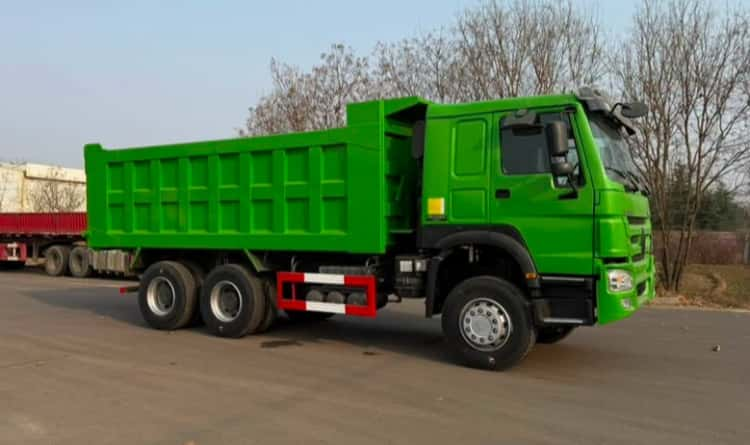
An overhaul, often called a major rebuild, focuses almost exclusively on one core assembly — most commonly the engine. During an overhaul, technicians disassemble the targeted unit, replace severely worn or broken parts, and reassemble it to restore basic working function. The scope is limited: other vehicle systems including chassis, axles, suspension, braking and transmission normally stay sealed and untouched, unless obvious defects are visible.
Overhaul follows a reactive logic: only parts showing significant wear or damage get swapped out. Parts that look usable stay in place, even if they are nearing the end of their fatigue cycle. There is no requirement for full vehicle disassembly, no mandatory NDT inspection of the frame or untouched cast components, and no standardized full-load performance validation for the whole truck. Documentation is typically limited to service receipts for the overhauled assembly. No independent third-party audit is required.
An overhaul fixes a known problem, but it does not reset the entire vehicle’s accumulated fatigue and wear. The rest of the truck continues aging from its original operating hours.
What Is a REMAN ROAD Certified Remanufactured Truck?
Standard remanufacturing is a complete, whole-vehicle workflow with strict pass/fail gates that apply to every component across the truck.
Before work begins, the core undergoes intake screening and mandatory NDT to uncover hidden cracks, corrosion and metal fatigue across frame, engine block and axle housings. Unsalvageable cores are rejected immediately. The entire truck is fully disassembled down to individual discrete components. Every single part is cleaned, inspected and graded. Reusable structural cast and forged components are precision-machined to restore OEM dimensional tolerances. All fatigue-critical consumable components are replaced with new specification parts proactively, regardless of visual condition.
After sub-assembly rebuild and bench testing, the full truck is reassembled, calibrated and tested under full load to verify performance matches near-new OEM standards. Every inspection, machining action and part replacement is logged in a VIN-linked traceability dossier. A final independent third-party audit must be passed before reman certification is issued.
The end result is a truck with a fully reset service cycle, with reliability comparable to a brand-new equivalent heavy truck.
Key Differences Between Remanufactured Truck and Overhauled Truck
Scope of Work
- Overhauled truck: Targeted to one assembly (engine, or sometimes transmission). Most of the vehicle remains untouched.
- Remanufactured truck: Full vehicle teardown and inspection of every component, covering chassis, powertrain, axles, brakes and all auxiliary systems.
Core Inspection & NDT
- Overhauled truck: Visual inspection only for the disassembled assembly. Frame and untouched major components receive no NDT screening. Hidden structural risks remain.
- Remanufactured truck: Mandatory NDT on all critical load-bearing cast and forged parts at intake and after machining. Cores with hidden structural defects are rejected.
Component Replacement Strategy
- Overhauled truck: Replace only visibly worn, damaged or failed parts. Functional but aging components remain in service.
- Remanufactured truck: Proactive replacement of all fatigue-limited safety and wear parts, before failure can occur.
Performance Testing
- Overhauled truck: Basic functional test of the rebuilt assembly only. No full-vehicle, full-load validation.
- Remanufactured truck: Instrumented bench dyno tests for sub-assemblies plus full-load road testing of the complete truck against OEM new performance benchmarks.
Asset Lifecycle
- Overhauled truck: Only the rebuilt assembly gets partial life extension. The rest of the truck retains its accumulated wear; total asset life is not fully reset.
- Remanufactured truck: The entire vehicle’s fatigue life is reset, delivering a complete new service cycle.
Documentation & Certification
- Overhaul: Simple repair invoices, limited records. No independent audit. Quality is self-claimed by the workshop.
- Remanufactured: Complete VIN-bound traceability dossier, including NDT reports, machining logs, parts inventory and test data, validated by third-party certification.
When to Choose Overhaul vs Certified Reman?
- Overhauled trucks fit this scenario: You already own a fleet truck with a failed engine or transmission, and you want to repair that single assembly to extend its remaining working time. It is a maintenance repair for your existing asset. It is not recommended for bulk fleet purchasing of “like-new” replacement vehicles.
- REMAN ROAD certified remanufactured trucks fit this scenario: You are purchasing replacement or expansion fleet assets, and require near-new reliability, predictable long-term operation, lower TCO, auditable ESG carbon savings and a fully reset service life.
Common Industry Misconceptions
- ❌ Myth: An engine overhaul is the same as full vehicle remanufacturing. Fact: Rebuilding just the engine leaves the chassis, axles and other systems with their original accumulated wear and hidden risks. This is overhaul, not reman.
- ❌ Myth: If an overhauled engine performs well, the whole truck is reliable. Fact: The axles, suspension and frame may still carry undetected metal fatigue from thousands of prior operating hours. Those components can fail unexpectedly and create costly downtime.
- ❌ Myth: Overhauled trucks have the same residual value as certified remanufactured trucks. Fact: Overhauled assets still carry the original wear history. Certified remanufactured truck have traceable proof of full restoration, protecting their residual value.
Conclusion
The fundamental distinction: overhaul is a targeted component repair, while standard remanufacturing is a complete whole-vehicle industrial regeneration. An overhaul fixes a broken assembly, but it does not inspect, restore or reset the rest of the truck. Hidden wear and structural risks can still trigger unexpected failures. REMAN ROAD certified remanufactured truck apply rigorous screening, full disassembly, proactive part replacement and third-party verification across every system of the vehicle, delivering near-new performance and a fully reset service cycle.
For fleet buyers, treating overhauled trucks and certified remanufactured trucks as equivalent assets leads to underestimated risk, unplanned downtime and poor procurement decisions. Clear definitions and standardised criteria are essential to avoid confusion in heavy truck sourcing.