True Remanufacturing: The Core Standard for Heavy-Duty Vehicle Circular Economy
Introduction
The circular economy for heavy-duty vehicles is often misunderstood as merely reusing old trucks, repairing broken parts, or melting scrap steel. These are discrete circular activities, but they do not by themselves build a stable, scalable circular system. At the centre of a functional heavy vehicle circular ecosystem sits true remanufacturing, defined by consistent engineering gates, material integrity assessment and performance reset criteria.
Repair fixes a fault to restore basic function. Overhaul replaces failed parts to extend immediate service life. Recycling recovers raw material value once an asset is no longer usable. True remanufacturing sits in the highest value tier of the circular hierarchy. It systematically resets a qualified core back to a defined, auditable performance baseline, unlocking repeated lifecycle circulation. For REMAN ROAD, this reman standard is the backbone that turns abstract circular economy concepts into a commercially viable, safe and globally tradable industrial model.
It anchors the value cascade of circular asset management
A mature heavy vehicle circular economy follows a clear value priority sequence: certified true remanufacturing first, then targeted component reuse, repair, and finally material recycling.
Without a well-defined true remanufacturing standard, the value cascade collapses. High-value structural cores that still hold sufficient residual fatigue capacity may be prematurely scrapped for raw steel. Conversely, assets that have crossed the irreversible damage boundary may be patched and sold as “recycled” or “circular” trucks, introducing safety risks and eroding market trust.
True remanufacturing provides the sorting rule. It identifies which assets are eligible for high-value lifecycle reset, which can be harvested for reusable components, and which must exit the loop for recycling. This prevents value leakage and ensures maximum embodied carbon and industrial labour embedded in the original vehicle is preserved.
It is built on engineering standards, not subjective market definitions
Circular economy policies, ESG reporting and green tender frameworks require clear, consistent definitions. The weakness of many regional circular schemes is that they treat overhaul, refurbishment and remanufacturing interchangeably. This creates greenwashing risks: lightly repaired trucks are labelled circular assets without objective proof of structural integrity or reset performance.
True remanufacturing removes that ambiguity. Its standard is rooted in fixed engineering requirements: upfront structural capacity screening, full disassembly, layered NDT and dimensional grading, rework limited to OEM-approved envelopes, bench validation against new-part performance benchmarks, and full VIN-linked traceability.
These are not optional best practices. They are the non-negotiable criteria that separate true remanufacturing from superficial restoration. When adopted as an industry core standard, they give fleet buyers, auditors and cross-border regulators a shared benchmark to evaluate circular assets.
It preserves embodied carbon, the key ESG advantage of heavy vehicle circulation
Manufacturing a new heavy truck consumes enormous volumes of steel, alloy, energy and mineral resources, releasing substantial embodied carbon. The biggest environmental benefit of the heavy-duty circular economy does not come from recycling — recycling still requires re-melting, refining and re-forming metal, with heavy energy input. It comes from retaining sound high-value castings and forgings through reman.
True remanufacturing only replaces sacrificial wear components while preserving the intact structural core. It avoids repeating the carbon cost of forging, casting and machining major load-bearing parts. This carbon saving is quantifiable and auditable, forming the core evidence for ESG disclosure, carbon accounting and green project bidding eligibility.
Without standardised true remanufacturing rules, this carbon benefit cannot be reliably claimed. A cosmetic refurb may have minimal real material reset, yet attempt to claim identical ESG gains. A universal true remanufacturing standard creates a verified basis for carbon credit and sustainability reporting.
It enables multi-cycle asset circulation, the long-term goal of circularity
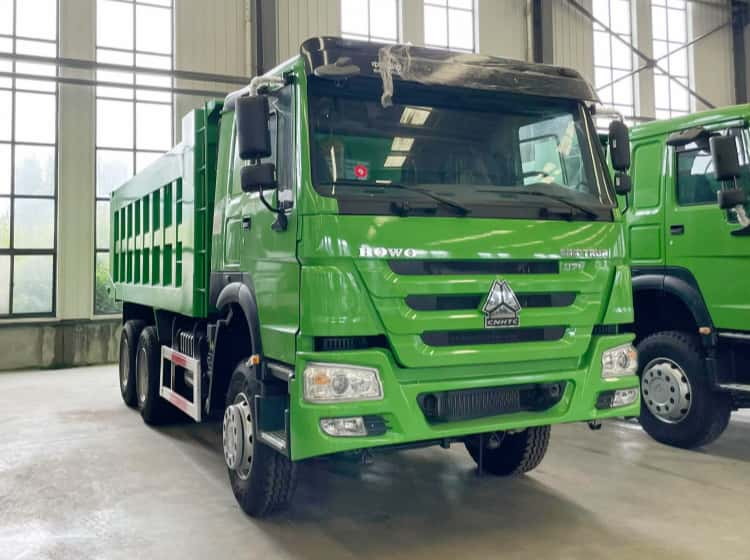
Many circular models only plan for a single reuse event: a used truck is rebuilt once, then scrapped when it fails again. True remanufacturing is designed for long-cycle circulation.
A core that passes the full remanufacturing workflow carries a digital lifecycle dossier recording its asset state, fatigue assessment, rework history and inspection thresholds. When it reaches the end of its subsequent service life, inspectors revisit the same engineering boundaries to judge whether it can enter another reman cycle.
This repeated reset is only possible under a stable remanufacturing standard. Consistent grading rules, OEM-referenced tolerances and traceable records let engineers calculate residual fatigue margin across multiple lifecycles. Legacy serviceable truck platforms with reman-friendly design legacy can circulate for decades within these rules, maximising the return on the original industrial investment.
It creates trust for cross-border circular trade
Heavy-duty vehicle circularity cannot be limited to local workshops. Markets in Africa, Central Asia and other emerging regions have steady demand for cost-effective, durable transport assets. But cross-border trade of used and rebuilt trucks suffers from pervasive information asymmetry. Buyers cannot easily verify whether a unit is safely reset, or merely patched.
True remanufacturing as a unified core standard solves this trust gap. A truck certified under REMAN ROAD reman standard rules carries a complete audit trail. Importers, fleet procurement teams and tender evaluators use the same set of inspection and performance criteria, regardless of workshop location. True remanufacturing turns a local rebuild product into a globally tradable circular asset.
This is a critical distinction: circular economy at scale depends on trade, and trade depends on a shared, enforceable quality standard.
It sets clear boundaries for what does NOT qualify as circular reman
A robust standard must define its exclusions as clearly as its requirements. Under the true remanufacturing framework, the following do not count as certified reman assets for circular economy accounting:
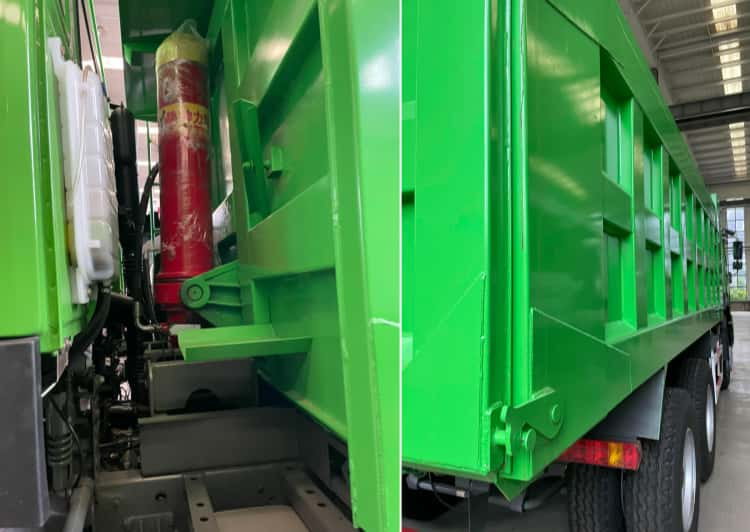
- Partial engine-only overhaul, leaving uninspected frame and load path components
- Cosmetic refurbishment, repainting and tyre replacement without structural assessment
- Repairs using mismatched, unqualified aftermarket parts that break original design intent
- Assets with irreversible metallurgical damage that are welded or modified to mask defects
- Units released without bench performance validation and documented inspection records
These activities can extend vehicle service life, but they do not deliver the controlled lifecycle reset that defines reman. Drawing this line prevents the circular economy from being diluted by low-quality shortcuts.
It aligns OEM design strategy with post-first-life circular value
Design for Reman (DfR) only delivers its full value when there is an established remanufacturing standard to match. If there is no recognised reman benchmark, OEMs have little incentive to engineer platforms for disassembly, inspection and rework.
When true remanufacturing is accepted as the core circular standard, it creates market feedback to vehicle developers. Platforms built with modular architecture, stable interfaces, NDT-accessible geometry and predefined rework limits can enter the reman loop more efficiently and repeatedly. A closed loop is formed: DfR design enables reman, and mature reman standards reward reman-friendly platform development.
Key caveat: reman is not infinite circulation
True remanufacturing is the core standard, but it is not a loop without exit points. Every component has a finite fatigue budget. Once structural assessment determines residual capacity is insufficient for another full service cycle, the asset exits the reman stream and moves to material recycling.
This controlled exit is part of the standard itself. A credible circular economy does not force unsafe assets back into service. It manages the asset’s journey through value tiers, respecting the invisible engineering boundary between recoverable cores and end-of-life material.
Closing
The heavy-duty vehicle circular economy cannot be built on loose definitions of reuse and repair. Its reliable, high-value operating foundation is true remanufacturing: a gated, engineering-first process that resets eligible cores to defined performance, safety and lifecycle baselines.
It protects embodied carbon, enables auditable ESG claims, supports multi-cycle asset circulation, builds cross-border trade trust and gives OEMs a clear target for Design for Reman. For REMAN ROAD, true remanufacturing is not just a product service. It is the core standard upon which the global heavy vehicle circular ecosystem is constructed.